
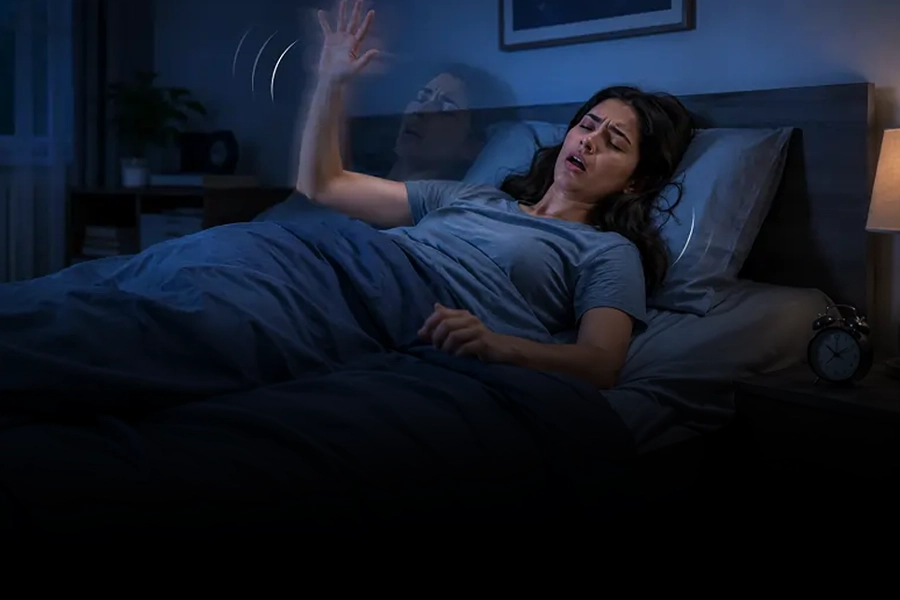
Almost everybody has run into it at some point, that odd, sudden feeling like you’re dropping… And then, right when sleep starts, you get this reflexive jolt in your body. It’s usually paired with a quick rush of worry, a racing heart, or even a startled gasp, and people often call it a hypnic jerk. Even if it feels scary in the moment, for most folks it’s a very normal, usually harmless sleep-related thing. Once you get a sense of what a sleep twitching is, why it shows up, and when it might be a clue that deserves attention, the whole experience can feel a lot less confusing and way less annoying too.
What Is a Hypnic Jerk?
A hypnic jerk (also known as a sleep twitching) is a sudden, very brief involuntary muscle contraction that happens as someone moves from being fully awake into actually falling asleep. Most times it shows up as a twitch in the arms or legs or sometimes a whole-body spasm, and it can come with that falling sensation or a quick, broken-up mental snapshot, like a half-formed dream. Even though it can feel intense, this is treated as a normal body event, not a medical red flag for the majority of people. It’s part of a wider group of sleep twitches that show up during the shift between different states of consciousness. The experience may feel different from one person to another, but the basic pattern behind it is pretty consistent.
The Hypnagogic State and Why It Matters
It helps to know the hypnagogic state to understand hypnic jerks. That’s the in-between phase where wakefulness is fading and sleep is beginning. During this time, the brain starts changing its patterns, muscle tone tends to loosen, and awareness becomes patchy. Because of that, people sometimes get dream-like sensations even though they haven’t fully crossed into deep sleep. This is also why these are so common here, since the brain and body aren’t yet fully synced up as the shift into sleep happens. Some researchers think the brief “not quite matching” between a relaxing body and a brain that is still half-alert can help trigger the sudden muscle contraction.
Causes of Hypnic Jerks
There isn’t one single, locked-in explanation for why these happen. Still, researchers have offered several theories that might contribute. One common idea is that as the body relaxes and begins drifting downward into sleep, the brain may briefly read that muscle slackening as if falling is happening, and then it triggers a protective reflex. Another theory centers on the normal back-and-forth in brain activity during the transition period. In that window, neurons involved in movement might fire for a moment in a slightly uncoordinated way as the brain regions switch from wake patterns into sleep-related patterns. There’s no final verdict, but the general view is that hypnic jerks reflect a complicated handoff (sometimes a bit imperfect) between wakefulness and the earliest stages of falling asleep.
Common Triggers That Increase Sleep Jerks
Even though hypnic jerks can happen to anyone, some things seem to make them show up more often. High caffeine or other stimulants, especially later in the day, can raise nervous system activity and make sleep jerks more likely. Hard exercise right before bed may also play a role, because the body hasn’t fully settled down before it tries to switch into sleep. Higher stress and anxiety are frequently reported too, since increased nervous system “onness” can disrupt that smooth walk into the hypnagogic state. Sleep deprivation is another big one. When someone is overtired, the brain and body may not coordinate the transition as cleanly, which can make those noticeable jerks more common. On top of that, inconsistent sleep timing and lots of screen time before bed have been linked with more frequent sleep disruptions of this type.
Related: Stress Impacts Sleep Quality and Cognitive Function
Is Body Twitching While Falling Asleep Normal?
For nearly everyone, body twitching during sleep onset is completely normal and typically doesn’t point to an underlying health issue. Estimates suggest a large share of the population experiences hypnic jerks at least sometimes, and many people have them regularly with no lasting consequences. These movements are usually quick, lasting only a fraction of a second, and they don’t cause physical damage even if they feel jarring. The main worry people tend to have isn’t medical. It’s more about the brief interruption to falling asleep, especially if the jerk is strong enough to fully pull them awake and make them try again to doze off.
Hypnic Jerks vs Other Types of Parasomnia
It’s also helpful to separate hypnic jerks from other parasomnias. Parasomnia is an umbrella term for unusual behaviors or experiences that happen during sleep or while shifting to and from sleep. Things like sleepwalking, night terrors, and REM sleep behavior disorder fall under that same broad umbrella, but they usually involve different kinds of actions and occur during different sleep stages than the quick sleep-onset window tied to sleep twitching. Knowing this difference can make it easier to tell a normal, harmless sleep twitching from a sleep disturbance that might need more evaluation from a sleep specialist.
When Sleep Jerks Might Signal Something More
Most of the time, an occasional hypnic jerk is nothing big to worry about. but there are those times when sleep jerks start being frequent or unusually strong, and then it’s smart to look a little closer. If the body jerks while sleeping so often that it keeps you from actually falling asleep, or it really messes up your rest every single night, then it might be worth bringing up with a healthcare provider. Also, if these movements come with other things, like major daytime tiredness, odd limb motions all through the night not just at sleep onset, or other hints of a wider sleep issue, that’s a good reason to get evaluated. This can help rule out things like periodic limb movement disorder, where the repetitive movements keep happening through the night, not only as a single twitch right when you start to drift off.
Tips to Reduce the Frequency of Sleep Twitching
If hypnic jerks happen enough to bother you, small lifestyle changes might help. Try a calmer pre-sleep routine too. Avoid intense exercise too close to bedtime. Managing stress can also matter; gentle stretching or deep breathing kind of things might make the shift into that hypnagogic state feel less abrupt. Keeping a steady sleep schedule, and getting enough total sleep, can reduce the kind of overtiredness that sometimes makes sleep jerks more noticeable or more intense.
Related: Hidden Link Between Mood, Sleep & Mental Sharpness
Conclude To Brief
Even though a hypnic jerk can feel shocking, for most people it’s a normal and generally harmless part of falling asleep. Learning what causes it (from the messy neurological handoff during the hypnagogic phase to lifestyle pieces like stress and caffeine) can really help reduce the anxiety that comes with it. Now, frequent or especially intense body jerks while sleeping should occasionally be checked in with a healthcare provider, but for the vast majority, that little brief twitch is just one more quirky, harmless thing the body does while it heads into sleep each night.
FAQs
Yes, it does. You want to avoid caffeine that can make your nervous system overdrive too much before bedtime.
Unlike those more complex parasomnias, a sleep twitching is just a single isolated muscle contraction rather than an ongoing, repeated pattern of unusual behavior.
Stress, anxiety, and sleep disorders trigger this.
You have to sleep well. You have to do meditation and yoga to calm your brain and mind. You should not drink caffeine before sleeping.
Yes, this goes away. However, it depends on causes. Sometimes, it cures early and sometimes, it takes long medical treatment to cure.