
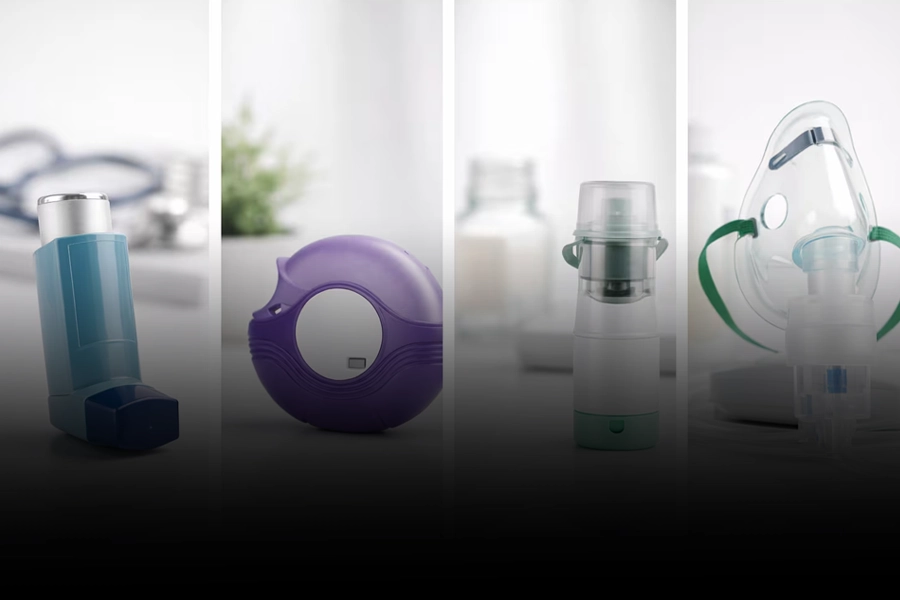
Millions of people are affected by Chronic Obstructive Pulmonary Disease (COPD). When disease spreads, some people look for OTC inhalers (over-the-counter inhalers). It is an immediate option where breathing inhalers without prescriptions cannot deliver enough relief. This blog is going to analyze OTC products, what they actually treat, how they differ based on the requirements of health conditions, and their limitations for COPD. It also shows alternatives to OTC inhalers for managing this chronic condition.
What Is COPD?
Chronic obstructive pulmonary disease, or COPD, is a lung condition that is caused by several types of damage in the lungs. These damages result in irritation and swelling, which is called inflammation. This limits airflow into the lungs. As a result, people experience struggles to breathe. This limitation of airflow is called obstructive. Common symptoms of COPD are challenges to take a breath, coughing regularly, and a whistling sound in the lungs called wheezing. People who are suffering from COPD may face worse symptoms day by day if they do not treat it on time or fail to get a diagnosis. Worse symptoms are chest tightness, coughing often, fever, and more difficulty taking breath. Worse symptoms are called exacerbations (eg-zas-er-bay-shun). Exacerbation can last from several days to weeks. It is caused by cold air, cold infections, air pollution, and other air-related issues.
What Are OTC Inhalers?
This type of inhaler works as a respiratory device that is mainly designed to provide relief from mild breathing issues for a short time. It is also used to treat asthma-related problems. Epinephrine is a bronchodilator that temporarily relaxes airway muscles, which helps to take a breath easily. This product is used for relieving occasional symptoms such as mild wheezing or tightness. This is also used to manage or reduce symptoms like chronic, progressive lung diseases like COPD.
Definition of Over-the-Counter Inhalers
An inhaler is a handheld device that doesn’t need electricity. The over-the-counter inhalers are regulated in the market, and users can purchase them from a retailer or pharmacy directly. The Respiratory Inhalers market is estimated at USD 37.00 billion in 2025 and is projected to reach USD 55.70 billion by 2034. Its classifications are Epinephrine (Adrenergic Bronchodilator), Racepinephrine (Racemic Epinephrine), and Inhaled Decongestants/Vapor Device. Now the question is “How do OTC inhalers work?” It is easier to access OTC rescue therapy, but ICS-FABAs or albuterol could lead to inappropriate use by patients without asthma (including patients with chronic obstructive pulmonary disease who may require regular use of alternative inhalers) and could promote dangerous self-management.
How OTC Products Differ from Prescription Inhalers
OTC products differ from prescription inhalers based on their active ingredients and their intended purpose. It is used to manage chronic inflammation and improve lung functions. On the other hand, Over-the-counter inhalers are used to relieve temporary symptoms. It does not cure inflammation or progressive airway damage that is caused by COPD. In the case of COPD management, there is required continuous targeted treatment compared to temporary treatment.
Are OTC inhalers effective for COPD?
No. The doses of prescription inhalers for COPD are advised by healthcare providers. This depends on users’ health condition and medical history. This inhaler is the combination of anti-inflammatory and bronchodilator medications. It is used on a daily schedule continuously to prevent flare-ups. On the other hand, OTC is not used based on proper medical treatment. It is used to improve your breathing condition temporarily. Its active ingredients are epinephrine or racepinephrine. But remember that frequent use of rescue inhalers is also related to exacerbations, decreased productivity, poor quality of life, increased healthcare utilization, and under-treatment, which ultimately increases the disease burden on the healthcare system. For these reasons, healthcare providers recommend prescription inhalers to manage the condition over OTC alternatives.
Who Should Consider OTC Inhalers?
OTC is suitable for those people who are feeling mild or occasional breathing issues. In some cases, people experience mild wheezing infrequently. In this case, there is no need for any diagnosis. It is considered a short-term OTC option. If people have an ongoing shortness of breath, a persistent cough, or a history of smoking combined with breathing difficulty, they need to start treatment for COPD. It is advised not to adopt self-management. OTC asthma inhalers are recognized as asthma diagnosis controls.
Are OTC Inhalers as Effective as Prescription Inhalers?
OTC is not considered as effective as prescription inhalers. The causes are based on medical criteria, treatment procedures, and active ingredients. Prescription inhalers offer varying technical properties. Moreover, a tailored and personalized approach to the selection of the most appropriate device for the patient is highly recommended in order to increase the likelihood of achieving improved disease outcomes and enhance persistence with device adherence. Importantly, education and support are crucial, not only to enable patients to recognize the need for optimal disease management but also to help them develop good inhaler technique. OTC cannot manage difficulties related to lung disease severity and pulmonary function to physical considerations, including manual dexterity and comorbidities such as arthritis. For these reasons, prescription inhalers are better.
Can You Buy A CODP Inhaler Over The Counter?
Many people think that they can or cannot buy a COPD inhaler over the counter. The reality is that medications formulated and approved for COPD are not available all the time without a proper prescription. The reason is the critical condition, medication plan, and right diagnosis from healthcare providers. It is advised to consult with your healthcare provider before buying an inhaler. You should not think of a COPD inhaler as the OTC inhaler alternatives.
Are OTC Inhalers Right for Everyone?
No, it is not right for everyone. Because COPD patients should not use OTC products to relieve the symptoms, the reason is that they are in severe condition; OTC is used for short-term use and mild cases. Some OTC products carry cardiovascular risks because of their ingredients and the chance of side effects. For this reason, it is recommended to take medical advice if you have any chronic diseases or are taking supplements daily. There is no best OTC inhaler for COPD because it depends on your health condition.
Summing Up
From the above discussion, it can be said that OTC inhalers offer short-term relief in the occasional and mild case. But it is not suitable for COPD cases. Because COPD is a critical condition of breathing challenges. There is a need for bronchodilators or anti-inflammatory medications and treatment plans to cure breathing issues. Moreover, people need to avoid smoking, polluted areas, dust, and factory areas to avoid breathing issues.
FAQs
1. Can OTC inhalers replace prescription inhalers for COPD?
No, OTC cannot. Because it is used for mild cases only.
2. What ingredient do most OTC inhalers contain?
The main ingredient is epinephrine that is used for OTC products.
3. Is it safe for someone with COPD to use an OTC inhaler occasionally?
No, it is worse for those because COPD is a chronic breathing issue, and this inhaler is used for mild cases.
4. Why do COPD treatments require a prescription?
COPD treatments require a prescription because of COPD treatment plans, medical history, current health condition, and diagnosis process.
5. What are the COPD symptoms?
The symptoms are cough, shortness of breath, wheezing, and feeling low energy.