
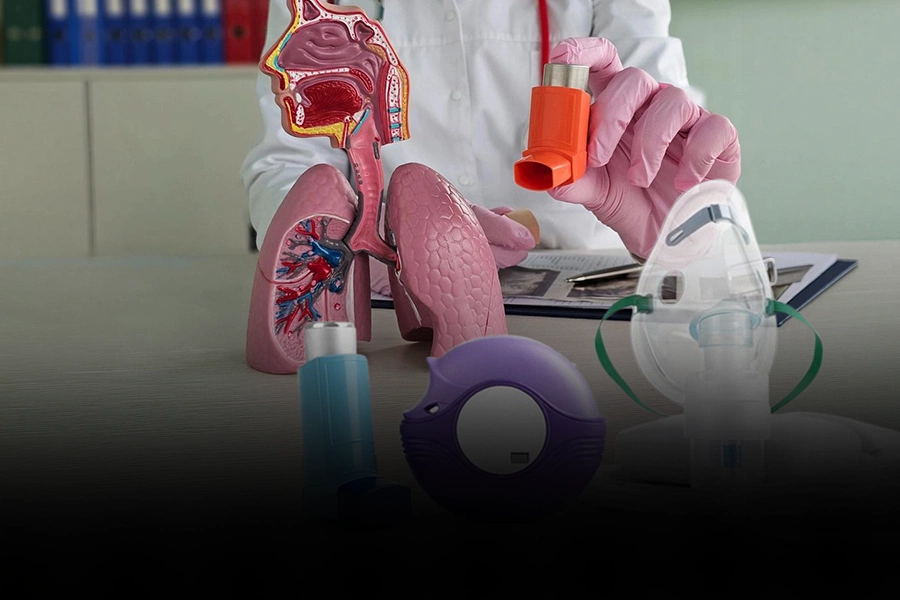
Okay, so if you’ve ever stood in a pharmacy aisle staring at a little plastic device wondering why there are like five different versions of the same thing, yeah, that’s basically what this is about. Inhalers for breathing problems come in more shapes and mechanisms than people realize until they actually need one.
I remember the first time someone handed me one and just said, “Two puffs, twice a day,” and walked off. No explanation. Which, fair, doctors are busy, but it left me more confused than before.
What Is an Inhaler?
Basically, it’s a small handheld device that pushes medicine straight into your lungs instead of making it travel through your whole bloodstream first. That’s the appeal: faster relief, fewer side effects elsewhere in the body, at least in theory.
Some inhalers spray a fine mist. Others release a puff of dry powder you have to breathe in hard. There’s more than one way to do this, which honestly is where a lot of the confusion starts.
People with asthma use them. People with COPD use them. Sometimes even people with certain allergies or bronchitis flare-ups get prescribed one temporarily. It’s not one-size-fits-all, not even close.
What Are the Different Types of Inhalers?
There isn’t really just “one kind.” Doctors usually split inhalers for breathing problems into a few broad buckets depending on what job they’re doing: some just calm things down fast, others work slowly and steadily in the background.
I’ll be honest, the naming gets a little inconsistent depending on which website or leaflet you’re reading. Sometimes the same device gets called different things. Anyway, broadly, you’ve got relievers, maintenance types, and combination ones. Let’s go through them, though not in a strict “step one, step two” kind of way because that’s not really how any of this works in real life.
Reliever Inhalers
These are the ones people usually mean when they say “rescue inhaler.” Quick-acting. You feel tight-chested or wheezy, you use it, and within minutes sometimes even seconds things loosen up a bit.
Albuterol (or salbutamol, if you’re in the UK) is probably the most common one people know by name. It relaxes the muscles around your airways so air can move more freely. Inhalers for breathing problems.
Now here’s the thing though: this kind isn’t meant to be used every day as a fix. If you’re reaching for it constantly, that’s usually a sign the underlying issue isn’t controlled, and something else needs adjusting. I’ve seen people treat this like their main inhaler, and it kind of… isn’t supposed to work that way.
Maintenance or Controller Inhalers
This is where things shift a bit. Instead of instant relief, these work in the background, usually daily, to keep inflammation down over time. You don’t feel an immediate difference, which honestly throws people off sometimes because they expect that quick reaction like with relievers.
Corticosteroid inhalers fall in this group mostly. Fluticasone, budesonide, stuff like that. They’re not glamorous; they’re kind of boring actually, but they do the slow, unglamorous work of keeping airways from getting inflamed in the first place.
People sometimes stop taking maintenance inhalers once they “feel fine,” which I get the logic for, but it kind of defeats the point since the whole idea is to prevent flare-ups before they start, not react after.
Combination Inhalers
These mix a long-acting bronchodilator with a steroid, so you’re getting both the airway-opening effect and the anti-inflammatory piece in one device. Less juggling, fewer devices to carry around, which some people find more manageable day to day.
Brands like Advair or Symbicort come up a lot here. Doctors tend to move patients toward these when a single type of maintenance medicine alone isn’t cutting it anymore.
I won’t pretend I fully understand why some people get switched to combination types faster than others; I think it depends a lot on how severe things are, or how consistent someone’s been with a single inhaler beforehand.
Different Types of Inhaler Devices
Okay, separate from the medicine inside, there’s also the actual mechanism of how the device delivers whatever’s inside it. This part trips people up honestly more than the medicine categories do.
The MDI inhaler is probably the most familiar shape: that little canister you press down while breathing in. Inhalers for breathing problems. Requires some coordination, pressing and inhaling at almost the same moment, which sounds simple but isn’t always for kids or elderly folks.
Then there’s the dry powder inhaler, or DPI inhaler for short, which doesn’t need that press-and-breathe timing. You just inhale sharply, and it pulls the powder in with your breath. Some people find these easier; some find them harder because they need a stronger inhale than they expect.
And then the soft mist inhaler, which is a newer-ish option that releases a slow-moving cloud of medicine rather than a quick spray or powder puff. Less forceful, easier to time, from what I’ve read anyway.
Spacers get mentioned a lot too, those tube attachments that go with MDIs to help more medicine actually reach the lungs instead of the back of your throat. Not technically its own inhaler type, but worth knowing about if you’re using an MDI.
What Is the Difference Between a Reliever and Maintenance Inhaler?
I sort of touched on this already, but it’s worth separating clearly because people mix them up constantly. One’s for right now, one’s for long-term.
Relievers act fast and wear off relatively fast too. Maintenance ones act slowly, need to be taken consistently, and don’t do much if you only use them occasionally.
Honestly, the biggest mistake I’ve seen is people assuming both types work the same way, just at “different strengths.” They don’t. It’s not a strength difference; it’s a completely different mechanism and purpose. One calms an active symptom. The other prevents symptoms from building up in the first place.
How to Choose the Right Type of Inhaler
This isn’t really something to self-decide; it’s something to be upfront about. A doctor typically figures this out based on how frequent and severe your symptoms are, whether it’s asthma or COPD, age, coordination ability (for device type), and honestly sometimes just what’s covered by insurance or the NHS depending on where you live.
That said, knowing the categories helps you ask better questions. Like, “Is this a reliever or maintenance type?” “Do I need a spacer with this?” things like that.
For folks dealing with COPD and asthma both, doctors sometimes prescribe overlapping types, which can get confusing fast if nobody explains the logic behind it. Worth asking directly rather than guessing.
Inhalers for breathing problems aren’t interchangeable between people either; what works fine for one person’s asthma might do very little for someone else’s, even with similar symptoms on paper.
Common Inhaler Side Effects and Precautions
Dry mouth, throat irritation, and sometimes a mild shakiness or fast heartbeat, especially with relievers. Steroid-based ones can occasionally cause oral thrush if you don’t rinse your mouth after using them. Small things are easy to prevent, and easy to forget.
Overusing reliever-type inhalers for breathing problems can also mask a worsening condition instead of actually fixing it, which is honestly one of the more overlooked risks. It’s not that the device is dangerous; it’s more that relying on it too heavily can hide a bigger issue underneath.
Also, and this gets skipped a lot, inhaler technique actually matters. Using it wrong, wrong timing, wrong angle, and not shaking it when needed, can mean you’re getting way less medicine than you think you are. A lot of people have never actually been shown the correct technique, just handed the device.
Anyway, if symptoms keep getting worse despite using inhalers for breathing problems as prescribed, that’s a “call your doctor” moment, not a “just use it more” moment.
FAQs
Not really recommended. Frequent daily use usually means your condition needs better long-term control.
Not better exactly, just different: DPIs need a stronger inhale; MDIs need coordination timing.
Only really needed with MDIs, and mainly to help more medicine actually reach your lungs.
Not without talking to a doctor first; stopping early often brings symptoms back.
Not stronger exactly, just doing two jobs (opening airways and reducing inflammation) at once.