
Most people don’t pay attention to their breathing. Heck so many of us don’t even realize that we are mouth breathing. We don’t necessarily think about our breathing and lungs very much.
We notice our knees, our back, and even our stomach-related issues when it decides to cause problems, But breathing? That’s just something that happens in the background until one day it doesn’t feel quite as easy as it used to and climbing a flight of stairs may leave us breathless. While we don’t really notice our breathing techniques, the way you breathe every day has a direct effect on oxygen delivery, energy levels, lung efficiency, and even your long-term respiratory health.
The thing is, breathing happens automatically, so we assume we’re doing it correctly. But that’s not always true. Stress, long work hours, poor posture, lack of exercise, pollution, and respiratory conditions can all affect the way we breathe without us noticing. Modern life encourages shallow chest breathing. This is why more and more pulmonologists and respiratory therapists are now recommending structured breathing techniques as part of everyday wellness, especially for people who have asthma and allergies, or have to face severe pollution exposure.
Good news is that just a few simple breathing techniques can improve the way you breathe, strengthen your respiratory muscles, and even support better oxygen flow. In this article, we’ll go over a few breathing techniques and help you in figuring out how to improve lung health naturally.
Importance of breathing techniques and patterns
Most adults spend their days taking short, shallow breaths. It sounds strange because breathing is something we do thousands of times a day, but many people rely heavily on their upper chest instead of using their diaphragm properly. This typically happens during stressful periods for the person or after years of sitting at desks, driving, or spending hours looking at screens.
Shallow breathing is a pretty inefficient way of breathing that can increase fatigue, breathlessness, and even tension. It can make your body work harder than necessary. The diaphragm is a muscle that sits right below your chest cavity and is the main muscle that’s used for breathing. When it works properly, the lungs expand more efficiently, allowing better oxygen intake and carbon dioxide removal.
When you use controlled breathing techniques, you train the body to use the diaphragm effectively. Diaphragmatic breathing techniques are pretty essential in reducing the unnecessary strain on your lungs. Researchers have also found that breathing retraining can improve breathing comfort and quality of life in people experiencing asthma and COPD symptoms.
People who use respiratory support medications like Asthalin HFA Inhaler 100 Mcg or Budamate 400 may also reap the benefits from these breathing techniques because they help improve your control over your breathing.
Diaphragmatic breathing
Diaphragmatic breathing is one of the most popular deep breathing exercises for lungs that is practiced and advised by several professionals in the field. Honestly, if there’s one breathing exercise that is recommended repeatedly, it’s diaphragmatic breathing.
Sometimes it’s also called belly breathing. Let’s get into what it actually means. So, diaphragmatic breathing essentially is focused on making use of your diaphragm, instead of relying on the upper chest. It may feel a little awkward the first time you’re told to do it but it’s of much help.
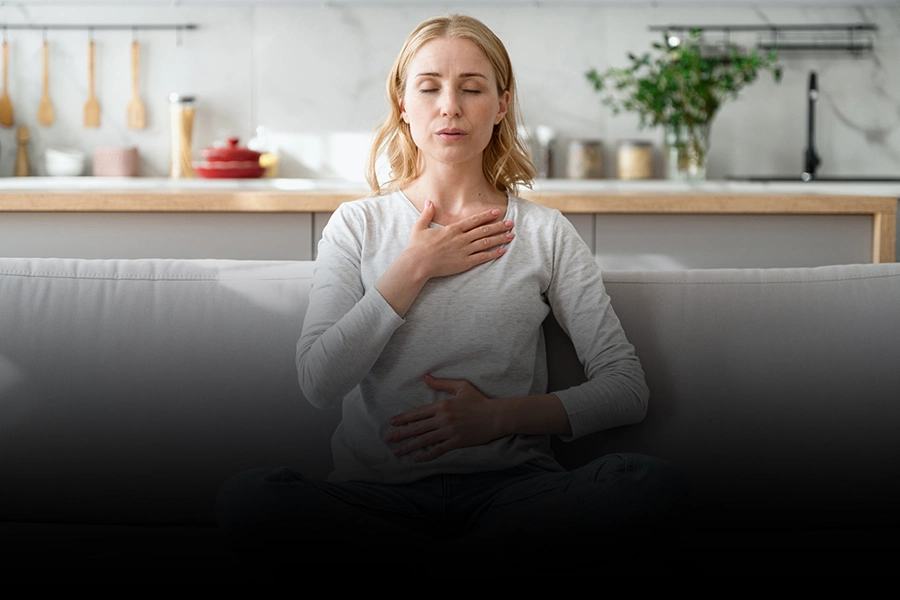
So what you’re supposed to do is place one hand on your stomach and one on your chest. As you inhale through your nose, your stomach should rise more than your chest. While you’re doing this, you have to either sit comfortably or lie down flat on your back. Mostly it’s preferable to lie down on your back. You inhale slowly through your nose for about 5-10 seconds. Hold your breath for about 3 seconds and then slowly exhale through your mouth for as long as you can so that your stomach can concave a little. This is how you repeat the process.
Pretty simple in theory but not always simple in practice. Many of us adults have spent years breathing differently, so the movement can feel unnatural at first. But with regular practice, diaphragmatic breathing can improve airflow efficiency and reduce the effort that’s required to breathe.
According to studies, this is one of the most popular breathing techniques for asthma and COPD patients and they have reported improvements in respiratory function, breathing control, and just an overall comfort after practicing this technique consistently. Which probably explains why it remains one of the most widely recommended breathing techniques for respiratory wellness.It slows exhalation and helps keep the airways open longer.
Pursed-Lip Breathing
Pursed-lip breathing is a technique that’s mostly recommended for individuals who experience trouble physical activity and face breathlessness. It basically helps in slowing down the rate at which you exhale and helps in keeping your airways passages open for a longer time.
It honestly sounds almost too simple to work. You basically inhale slowly through your nose for about 2 seconds and then exhale through slightly pursed lips for about 4 seconds, almost as if you’re gently blowing out a candle. That’s really it with this breathing technique.
People who experience breathlessness often notice that rapid breathing makes them feel worse. Pursed-lip breathing encourages a slower rhythm of your respiratory system, which can reduce that feeling of panic that can sometimes accompany the breathlessness feeling.Sometimes the smallest adjustments create the biggest difference and this technique is commonly used in pulmonary rehabilitation programs because it helps slow exhalation and keeps airways open longer. It’s not a dramatic breathing exercise, and most aren’t. Just doing this a few times and regularly can help in making your breathing feel steadier and more controlled.
Deep Breathing Exercises for Lungs and Oxygen Exchange
As we mentioned, our modern life tends to encourage shallow breathing. Shallow breathing is a huge silent problem because it limits how much your lungs will expand. Long hours sitting, constant stress, and limited physical movement can all contribute to reduced lung expansion throughout the day.
When you breathe deeply, you’re giving and allowing your lungs to occupy more space to fully inflate and that improves circulation throughout the body. This is something that doesn’t happen with shallow breathing and that’s just what we aim to change. The goal with these breathing techniques isn’t to take the biggest breath possible. That’s quite a common misunderstanding. Instead, the focus is basically on gradually filling the lungs and allowing them to expand more completely.
A typical breathing exercise will look like this. You’re supposed to inhale deeply through the nose for about 4 seconds, then you’ll hold your breath for 2-3 seconds and exhale steadily through your mouth for about 6 seconds.
This kind of breathing exercise will help you use your lungs to their fullest capacity and also help in relaxation by activating the parasympathetic nervous system. Some research also suggests it may positively affect stress levels, concentration, and sleep quality.
This and the other breathing techniques will work wonders for people who are presently recovering from any respiratory infections or long periods of inactivity.
Final Thoughts
Our lungs are constantly working for us in the background. Yet such less people actually pay attention to how they work and help us out with our daily functioning. We need optimal lung functioning to do practically anything in our day. The way we breathe affects our oxygen delivery, stress levels, physical performance, and even overall respiratory comfort.
From diaphragmatic breathing to pursed-lip breathing and other controlled breathing exercises, these methods offer practical ways to support your lung function and help you develop healthier breathing habits.
The improvements may not happen overnight. In fact, they’re often subtle at first. But that’s usually how meaningful changes work. A few minutes of practice today. A little more awareness tomorrow. Then gradually, over time, breathing starts to feel easier, calmer, and more natural.
FAQs
How often should I practise breathing techniques?
Most people benefit from 10–15 minutes of daily practice.
2.Can these breathing techniques cure my asthma?
Not really, unfortunately. While they can help you manage your asthma, they won’t relace any medical treatment.
3. How quickly will I see the results?
Some people notice changes within days, while others require several weeks.
4. Can these breathing techniques replace inhalers?
Not necessarily. These breathing techniques won’t be able to actually replace your inhalers like the Asthalin HFA Inhaler 100 Mcg or Budamate 400, they will just support your lungs.